

What is Chronic Kidney Disease?
Chronic Kidney Disease (CKD) means the kidneys slowly lose their ability to work over time. It is most common in older cats, but younger cats can also be affected.
Kidneys are very important organs. They:
- Filter waste from the blood and remove it in the urine.
- Help control water and electrolyte balance in the body.
- Help regulate blood pressure.
- Make a hormone called erythropoietin, which tells the bone marrow to make red blood cells.
How Common is CKD?
CKD can happen in cats of any age or breed, but it is more common in middle-aged and senior cats.
- About 80% of cats over 15 years old have CKD.
- Some cats can start to show signs as early as 6 years old.
What Causes CKD and Can It Be Reversed?
In many cats, the exact cause cannot be found — this is called idiopathic kidney disease, which means “no known cause.” Imaging such as X-rays and ultrasound can help look for possible causes and guide treatment. Even when the cause isn’t clear, there are many ways to manage CKD to help your cat feel better and slow down the disease.
Possible causes of CKD include:
- Exposure to toxins (like antifreeze or lilies)
- Genetic diseases (such as Polycystic Kidney Disease)
- High blood pressure (which can cause or result from CKD)
- Poor blood flow or anemia
- Infections (bacterial, viral, or fungal)
- Cancer
- FIV infection
- Urinary blockage or damage
- Immune system diseases
While some causes can be treated, most kidney changes cannot be reversed at this time. The goal is to slow down the disease and keep your cat comfortable.
What Are the Signs of CKD?
Most cats don’t show signs until about two-thirds of their kidney function is gone. That’s why regular vet visits and lab tests are so important.
Common signs of CKD include:
- Weight loss and muscle loss
- Drinking more water and urinating more often (sometimes outside the litter box)
- Poor appetite or eating less
- Low energy or sleeping more
- Increased meowing or other vocal changes
- Poor grooming, dry coat, or brittle nails
- Weakness
- Vomiting
- Pale gums (anemia)
How is CKD Diagnosed?
Depending on the life stage of your cat, your veterinarian may already be checking your cat annually to biannually for signs of kidney decline.
Recommended testing:
- Begin annual blood and urine tests by age 3
- Blood pressure checks should begin by age 7.
- Senior cats (10 years and older) should visit the vet every 6 months for exams, blood pressure checks, weight and body condition checks, and blood and urine tests.
Testing may include:
- Talking about appetite, water intake, and litterbox habits.
- Blood and urine tests- looking for trends in your cat’s blood levels.
- Urine culture to look for hidden infections.
- UPC ratio to check for protein loss in urine.
- Blood pressure measurement to find or prevent damage.
- X-rays or ultrasound to look at kidney shape, size, architecture and the presence of stones.
When we check your cat’s blood and urine for kidney disease, there are a few key values we focus on:
1. Creatinine
- A waste product made when the body breaks down protein.
- The kidneys normally filter it out of the blood.
- You can think of the kidney’s nephrons as tiny coffee filters that help remove creatinine!
2. SDMA
- Helps us see how well your cat’s kidneys are working.
- Can detect early changes in kidney function, sometimes before creatinine rises.
3. Urine Protein-to-Creatinine Ratio (UPC)
- Tells us if too much protein is leaking into the urine.
- When the kidneys are injured, the “filters” (nephrons) can get damaged, allowing protein to pass through when it shouldn’t.
4. Urinalysis
- Checks how well the kidneys are concentrating urine.
- Cats are natural carnivores and should make concentrated urine, so this helps us understand how well the kidneys are functioning.
What are the Stages of Kidney Disease?
CKD is staged as 1 - 4 according to an international staging system (IRIS) depending on these blood/urine values and signs of illness at home.
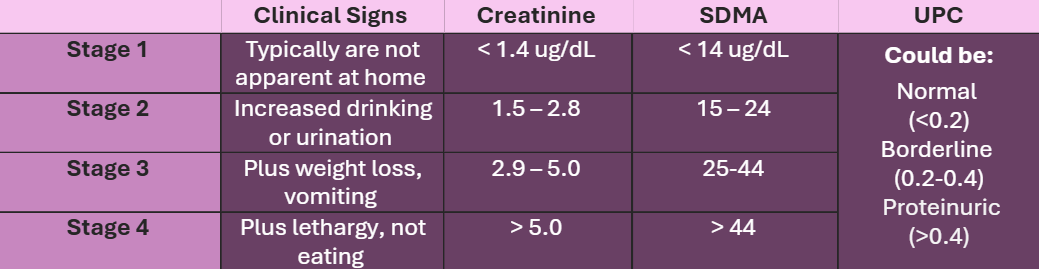
Early lab work and changes in trends (bloodwork, urine tests, etc.) help us to find CKD sooner! There are many grey zones with CKD. Each cat may show signs of illness differently. This enables early treatment, monitoring, and improving the lifespan of your precious kitty.
How is CKD Managed?
Some cats may need a short hospital stay for IV fluids to fix dehydration or treat infection.
After that, long-term management focuses on keeping your cat hydrated, comfortable, and eating well.
Key parts of CKD management:
1. Diet - A kidney-friendly diet has been shown in research to slow the disease.
- These diets have less phosphorus and protein if your cat needs certain restrictions.
- If your cat won’t eat a prescription diet, your vet can recommend over-the-counter foods that are lower in phosphorus
- Appetite is very important!! Let us know so we can help if your cat doesn’t like their diet.
2. Hydration - Keeping your cat hydrated is very important.
- Always provide fresh water (many cats prefer water fountains)
- Feed canned food to increase water intake
- Your vet may teach you to give subcutaneous fluids at home
3. Nutrition and Appetite - Older cats need more calories and nutrients to stay healthy. If your cat loses interest in food, your vet can suggest appetite stimulants or other options.
4. Medications - Your vet may prescribe:
- Nausea or vomiting medication
- Phosphate binders to reduce phosphorus in the blood
- Appetite stimulants
- Anemia treatments (to help the body make more red blood cells)
5. Managing Other Conditions - Cats with CKD may also have other problems like hyperthyroidism or diabetes. Managing these conditions helps protect the kidneys.
6. Preventing Constipation - Constipation is very common in cats with CKD and is one of the main reasons they go to the ER.
Signs of constipation include infrequent or absent bowel movements, straining or vocalizing during defecation, small, hard, or dry stools, loss of appetite, vomiting, and increased licking of the anal area.
To help prevent constipation:
- Keep your cat hydrated
- Provide several water bowls around the house
- Feed a kidney or high-fiber diet if recommended
- Ask your vet about safe water supplements or laxatives
What is the Prognosis for Cats with CKD?
Every cat’s CKD progresses differently. With regular checkups, hydration, and the right diet, many cats can live happy and comfortable lives for years after diagnosis!
Chronic Kidney Disease Treatment for Cats in Louisiana
Cat Care Center offers comprehensive CKD treatment for cats in Louisiana, including early screening, advanced diagnostics, long-term management, and ongoing kidney research.
Some cats may require a short hospital stay for IV fluids or infection treatment. Long-term care focuses on comfort, hydration, nutrition, and quality of life.
Feline Kidney Disease Study in Louisiana
Cat Care Center is proud to offer an ongoing feline kidney disease study in Louisiana, designed to improve how chronic kidney disease (CKD) is monitored and managed in cats. This study is available to eligible cats with CKD, and participation may include FREE care, such as diagnostics, monitoring, and follow-up visits!
Cats enrolled in the study receive close medical oversight from our feline-only veterinary team, while also helping advance knowledge that benefits cats everywhere. Many families seek out this program when searching for kidney studies for cats in Louisiana or options for free kidney care for cats, and we are honored to support both their cats and the broader feline community.
To learn more about eligibility and enrollment, visit our Kidney Study page here.
You’re Not Alone! We’re Here to Help
A kidney disease diagnosis can feel overwhelming, but you don’t have to navigate it alone. Our feline-only team is here to support cats and caregivers throughout every stage of CKD.
If you’re searching for experienced kidney disease care for cats in Louisiana, contact Cat Care Center today!